Di Ammonium Phosphate in wine making
Di Ammonium Phosphate in wine making
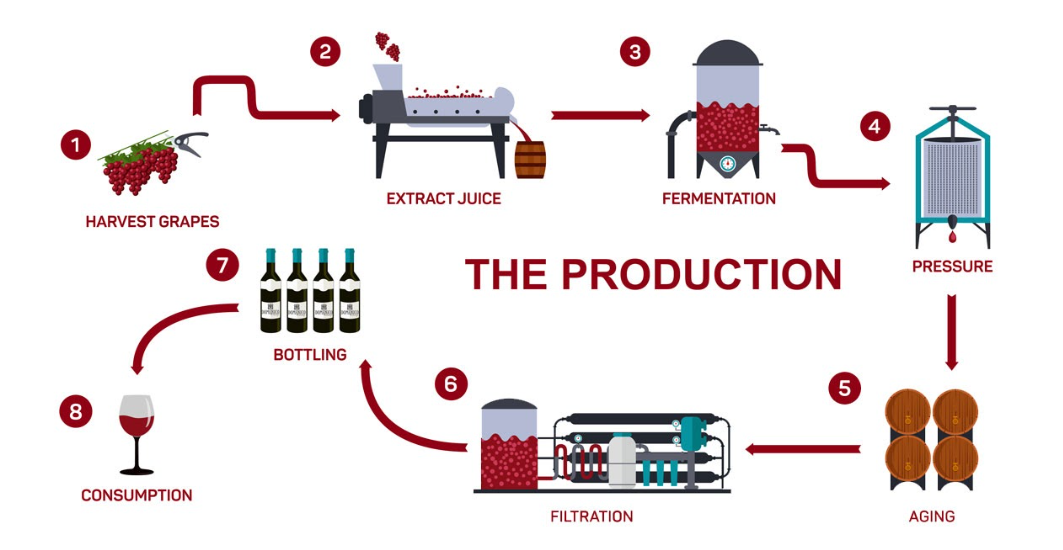
The journey from vine to wine:
- Harvest.
- Destemming & Crushing. The grapes are usually separated from their stems and leaves before they’re crushed – either by machine or barefoot stomping.
- Fermentation. The yeast help sugars of grape juice turn into alcohol, Red and rosé wines are fermented in vats with the grape skins for varying lengths of time. This helps give them colour, flavour and tanninand.
- Pressing. Once red wine has finished fermenting, the grapes are pressed to remove the skins.
- Aging. Wine can be matured in oak or stainless steel, or in traditional vessels like terracotta or concrete. It can be aged for several months or as long as several years, but white wine is typically matured for less time, which builds flavour and texture.
- Filtration. The wine is fined and filtered, during fining, an agent is added to the wine that binds to sediment and particles, which fall to the bottom ready to be removed. The wine is then passed through a filter to remove particles that make it look cloudy, and organisms that can make it unstable. Some winemakers choose not to fine or filter their wines.
- Bottling. Now it is time to bottle and add labels.
Yeast is a very important part of the fermentation process, gobbling up the sugar and converting it into alcohol. But sometimes the yeast tires out before all the desired sugar is converted—that’s what’s referred to as a “stuck” fermentation. Yeasts can be old or weak or just not really digging the grapes they are paired with, or something in the environment can be getting in the way, like the temperature is wrong or something wasn’t clean, disrupting the process. And some yeasts just don’t do well without a lot of nitrogen around, which is what DAP brings to the table.
A wide variety of compounds containing nitrogen are found in wines, including ammonia, nitrates, amines, amino acids, peptides,proteins, and vitamins. They are important chiefly because they stimulate yeast and bacteria growth. The average total nitrogen content of grape musts is about 600 ppm.
Ammonia appears in musts and wines largely as the ammonium ion(NH4+). In musts it ranges from about 5 to 175 ppm, averaging about 125 ppm. The nitrogen content of soils and its form greatly influence the ammonium content of musts, Yeasts use up much of it in fermentation; ammonia concentration in wines is only about 12 ppm. For wine made with fruits and other non grape ingredients, adding nitrogen-typically Di Ammonium Phosphate or urea-has been common. In the past most winemakers felt that grape musts contained enough nitrogen,but current evidence suggests that adding ammonium salts to them can improve wine quality. On the other hand,added ammonia can increase the amount of certain amino acids, especially histidine (a precursor of histamine), which may in some cases be undesirable.
Many amino acids are present in musts and wines, the principal one usually being proline, at an average concentration of about $00 ppm.Normal wine yeasts can make needed amino acids from ammonium ions and the sugar in musts, but those already present in grape musts can stimulate the growth of yeasts and increase the fermentation rate.During yeast growth many of the amino acids decrease. Some are necessary for the development of lactic acid bacteria.
The addition of Di Ammonium Phosphate in the Fermentation of Wine has various benefits:
- DAP stimulates the fermentation process.
- It helps in flavour consistency.
- It removes the sulfur smell from fermenting (which is usually because of stressed or stuck yeast).
When used properly, not only can DAP help make sure fermentation goes smoothly, it can also prevent unwanted characteristics and even boost flavors and aromatics.